
Magic in the Dark

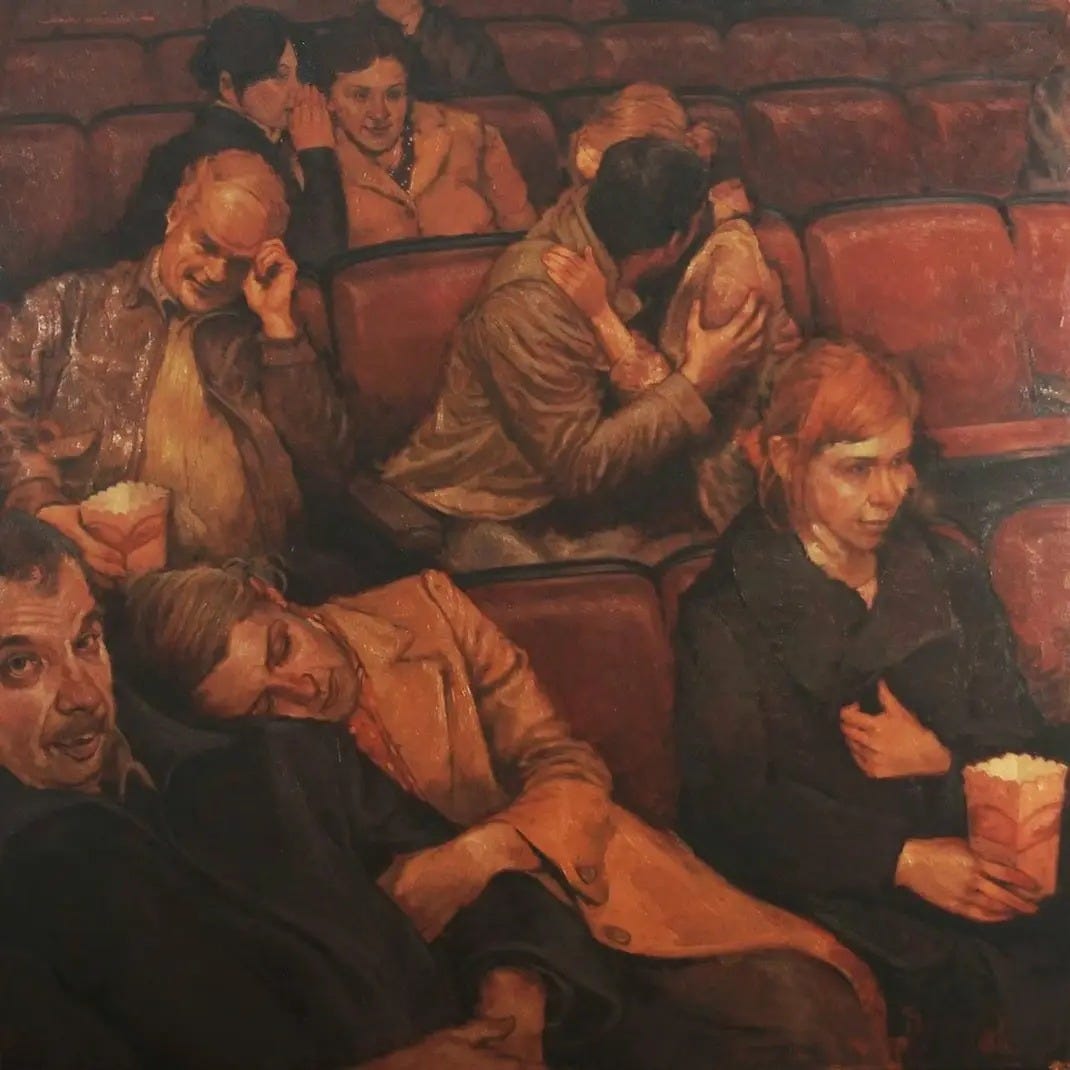
Yash Raj Films recently re-released a couple of their older films calling it the “nostalgia film festival” on social media. The nostalgia could be for the films, but the attraction is the experience of watching the films in a theater. You can of course watch these films on OTT - conveniently pausing them as and when life takes over - but the charm is of watching them in a cinema hall. And cinema halls, particularly in India, have rarely been about convenience.
While the trend of re-releasing older films might be a marketing gimmick meant to attract audiences, it evokes the preciousness of the cinema theater experience. Films like Sriram Raghavan’s Merry Christmas and Aki Kaurismaki’s Fallen Leaves also pay an ode to it. At a time when going to the theater is becoming uncommon due to rising ticket prices and shifting attention spans, it is inevitable that this feels nostalgic.
“Keep your longings in check” - warns a scene in Merry Christmas - almost like a self-aware nod to the film and audience relationship. Sitting apart in two different rows of the theater they have come to, the film’s two strangers are as aware of each other as we are of the space they inhabit. Cinema hall scenes in films have always been fascinating, reminding us of our own identities as audiences. Perhaps they make us feel important.
In the theater, time is experienced differently. This is not like the calculative-ness of the OTT experience. It demands making peace with boredom. You have to risk the possibility of disappointment. You have to be patient with waiting, mishearing dialogues, and talkative audiences. Before multiplexes took over, it worked on the opposite of consumerist logic for the cinema was never about convenience or comfort. It had a bigger heart.
Sometimes a film will turn out to be a dud and you will find your time wasted. Wasted time itself can have hierarchies - it can be “time-pass” or “time-waste”. Sometimes you will forget time itself. One can’t happen if you are not ready for the other. It is a love story.
Fallen Leaves centers a significant part of its own love story around a cinema theater as a backdrop. Though recently released on OTT, it is the kind of film you wish you were watching in a theater. The first time its protagonist smiles is when she gets asked out to go to the cinema. The cinema is both leisure and pleasure, something missing in her working class life. It is also a promise of life that is still to be lived.
As the years go by, regular theater-goers accumulate memories of the cinema, not all of which have to do with the films. I like to pay attention to shifts in mood, silence, and laughter. It makes me see the same film differently. There are also audience comments. Once in the middle of a loud dance-sequence, a man sitting next to me picked up his phone and nonchalantly lied that he was in an office meeting. Another time, a talkative couple, after being policed into silence, commented that we should be watching the film at home if we want the luxury of silence.
My first cinema hall-related memory is of watching a film in which a baby falls off a building. I must have been 5 or 6 years old then but it is startling how well I remember it. The baby turns out to be a doll but my recollection is less interested in that resolution or the relief it provides. It is the shock of that fall which is arrested in memory. It is hard to tell if it is the scene, or the feeling of the scene that has stayed with me. If it felt real, it must have been real.
First published: https://indianexpress.com/article/opinion/yash-raj-nostalgia-film-festival-uncomfortable-enduring-charm-theatre-9159472/